We moved to a rental house recently, and the toilet (just one bathroom) we got was put into the house in 1990. Therefore, it uses 3.5 gallons per flush. Obviously, a no-brainer to replace it with something better.
Instead of completely ripping out the toilet and replacing it, and sending the old toilet to the landfill, we looked at an alternative option.
There are now products on the market that will reduce your water amount per flush without buying a new one, and give you an option for a partial flush.
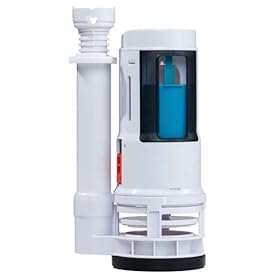
I purchased the One2flush 200 Dual Flush Retrofit Kit, and planned to reduce my usage to something similar to a 1.3 - 1.6 gallons per flush level, plus have the option to use the low flush option (for liquids).
When I went to install the product, I had problems getting the wing nuts off the back of the toilet, that connects the tank to the bowl. It must have rusted or sealed on there tight, as I spend almost 2 hours trying to get them off. I got one off finally, and tried to loosen the other by pulling and lifting on the tank.
As expected, I cracked the tank. So much for a zero waste solution!
Now I still had a bolt attached to the bowl, and a broken tank. I checked the local Restore, but they only sold toilets as one piece, not the tank or bowl separately. Since we only have one bathroom, I was in a time crunch to get it repaired. The next best option was to buy a new toilet tank.
The new tank was rated for 1.6 gallons per flush, which is better than what we had, but unfortunately, they didn't sell the 1.28 gpf model as a stand-alone option. Only in the full kit version. Which brings me to a quick rant: Why can't you buy each piece individually? There are pieces you should be able to save (lid, base bowl, plunger, water tubes, etc), so it seems wasteful to have to replace every piece of the toilet.
I finally got the retrofit dual-flush kit installed, which was pretty simple to install. There is some adjustment you'll need to make on the different flush levels, but the option to adjust it is nice to have.
Overall, I ended up with a better solution.
Toilet before, each flush = 3.5 gpf
Toilet after, each flush = 1.6 gpf for full, and approx 0.75-1.0 gpf for half flush
I wish I wouldn't have broken the tank, but this is just another example of why it can be tough to do the right thing. I hope my experiences give people some reminders to keep plugging along with your eco-friendly lifestyle, even when things go wrong, and you end up making a worse impact on the environment than you intended.
Showing posts with label water. Show all posts
Saturday, May 8, 2010
Monday, March 29, 2010
Rockwell Collins goes green with LEED buildings
I had the opportunity to tour one of the LEED certified buildings on the Rockwell Collins campus in Cedar Rapids, IA. The older building of the two is Gold certified, and the newer one is Silver.
At the beginning of the project, they discovered that many LEED buildings cost around $250 per square foot. They were able to complete the 120,000 square foot pre-engineered building for less than $100 per square foot. The additional investment in obtaining LEED certification, and the enhancements required to achieve a high enough score, had a payback of about one year. Therefore, in the 2nd year, they would start to see cost savings, compared to a non-LEED certified building.
Some of the cool features that are included in these buildings include:
As an employee, if you need a break from work, try hitting some putts in the break area, or put together a puzzle.
- 99% of construction waste — more than 1,000 tons — was diverted from the landfill
- Building footprint covers only 2.75 acres, and nearby pond was incorporated into the design
- More than 30 dedicated parking spaces for low-emissions and fuel-efficient vehicles
- 40% (385 gallons) of water use reduction through waterless urinals, dual-flush toilets, rainfall capture on roof, etc
- Exceeds ASHRAE 90.1-2004 minimum energy performance requirements by more than 20%
- More than 15% of building material is recycled content
- Energy Star reflective roofing
- Lots of natural light to minimize need for lighting, and lights are on timers and motion sensors to reduce costs when left on
- Energy efficient windows with shades to reduce heating effects
- To reduce driving and wasted time to get to the main facility (headquarters) across the street, a shuttle vehicle was setup that runs every 5 minutes
- Chaning rooms and showers to encourage bike riding
- Optimized parking lot lighting
- Low VOC paint and coatings, and carpet contained recycled content
- Xerascaping (native plants) deployed to minimize amount of water usage
- Variable frequency drives (VFD) installed on equipment to reduce electricity costs of large equipment, part of larger energy management software system
To learn more about this project, visit the Ryan Construction website.
Monday, September 7, 2009
Paradise covered in trash?
We finally got around to taking a honeymoon. We picked St. Croix in the Virgin Islands as our destination, because my wife was impressed with her visit to St. John's and St. Thomas a few years ago.
First of all, if you want to visit Hawaii, but can't afford the flight, then the Virgin Islands is the next best thing! The views were spectacular, as you can see from some photos below...


That being said, one of the disappointments about St. Croix was the amount of trash we saw on the beaches. I understand that the trash that washes up on a beach does not usually come from the local people. However, I think it is important for an island that relies on tourism to have a permanent program in place to keep the beaches clean. In addition, we did not see a very strong recycling program, so I am certain that the locals and tourists are contributing a significant amount to the problem.
Each beach access we stopped at contained a wide variety of garbage that had washed ashore. Plastics, milk jugs and cartons, fishing lines and lures, glass bottles, aluminum cans, cardboard, etc. You name it, we saw it.
Since this was our vacation, I wanted to take my "environmental" hat off for the week (yeah right!), but the longer we were there, the more obvious the trash became, and the more we pressured each other into doing something about it.
There was a potential hurricane (Erika) that almost hit while we were there. It ended up being a tropical depression, so we only missed half-a-days worth of activities. Since we were limited on what we could do that day, we decided to go visit Isaac and Jack's Bay, a secluded series of beaches on the southeast side of the island.

We had visited Isaac's Bay earlier in the week (hiking from Point Udall, the easternmost part of the US). We wanted to see the other side, so we approached Jack's Bay from the other road, and found it to be an easier and better marked hiking trail.
As we approached the bay, we again noticed a lot of trash that had washed up onto the beach. First, we just picked up a few items that were obvious (platic doll leg, lighter, plastic bottle), but the more we picked up, the more we saw.
We decided to go full-board and pick up as much trash as we could from the eastern part of Jack's Bay. It took us about an hour, but it was well worth it.
There were some nearby pelicans towards the edge of the bay. If you've seen the video of the albatross and the plastic found in their stomaches on Midway Island, you'll understand our satisfaction when we were done (watch video link below). Basically, the birds eat the plastic, thinking it's food, and it takes up space in their stomach forever, which prevents them from growing strong enough to fly.
We decided to take a picture of what we collected. It was pretty scary what we found in that short amount of time, including hair curlers, motor oil containers, and toothbrushes.

We don't want to single out St. Croix, as there are many beaches around the world with this same problem. What hope this blog can lead to some change in how the beaches are treated by those who live closest to them. Here are some recommendations we would like to recommend...
1) There needs to be a regular beach cleanup on the island. Encourage the tourists to get involved, along with the school children. As you can see, it doesn't take much time to make a big impact
2) Once the beaches are cleaned, start to track and categorize the trash found on subsequent cleanup efforts, to determine where the trash is coming from, so the problem can be minimized.
First of all, if you want to visit Hawaii, but can't afford the flight, then the Virgin Islands is the next best thing! The views were spectacular, as you can see from some photos below...
That being said, one of the disappointments about St. Croix was the amount of trash we saw on the beaches. I understand that the trash that washes up on a beach does not usually come from the local people. However, I think it is important for an island that relies on tourism to have a permanent program in place to keep the beaches clean. In addition, we did not see a very strong recycling program, so I am certain that the locals and tourists are contributing a significant amount to the problem.
Each beach access we stopped at contained a wide variety of garbage that had washed ashore. Plastics, milk jugs and cartons, fishing lines and lures, glass bottles, aluminum cans, cardboard, etc. You name it, we saw it.
Since this was our vacation, I wanted to take my "environmental" hat off for the week (yeah right!), but the longer we were there, the more obvious the trash became, and the more we pressured each other into doing something about it.
There was a potential hurricane (Erika) that almost hit while we were there. It ended up being a tropical depression, so we only missed half-a-days worth of activities. Since we were limited on what we could do that day, we decided to go visit Isaac and Jack's Bay, a secluded series of beaches on the southeast side of the island.
We had visited Isaac's Bay earlier in the week (hiking from Point Udall, the easternmost part of the US). We wanted to see the other side, so we approached Jack's Bay from the other road, and found it to be an easier and better marked hiking trail.
As we approached the bay, we again noticed a lot of trash that had washed up onto the beach. First, we just picked up a few items that were obvious (platic doll leg, lighter, plastic bottle), but the more we picked up, the more we saw.
We decided to go full-board and pick up as much trash as we could from the eastern part of Jack's Bay. It took us about an hour, but it was well worth it.
There were some nearby pelicans towards the edge of the bay. If you've seen the video of the albatross and the plastic found in their stomaches on Midway Island, you'll understand our satisfaction when we were done (watch video link below). Basically, the birds eat the plastic, thinking it's food, and it takes up space in their stomach forever, which prevents them from growing strong enough to fly.
We decided to take a picture of what we collected. It was pretty scary what we found in that short amount of time, including hair curlers, motor oil containers, and toothbrushes.
We don't want to single out St. Croix, as there are many beaches around the world with this same problem. What hope this blog can lead to some change in how the beaches are treated by those who live closest to them. Here are some recommendations we would like to recommend...
1) There needs to be a regular beach cleanup on the island. Encourage the tourists to get involved, along with the school children. As you can see, it doesn't take much time to make a big impact
2) Once the beaches are cleaned, start to track and categorize the trash found on subsequent cleanup efforts, to determine where the trash is coming from, so the problem can be minimized.
Subscribe to:
Posts (Atom)